
Summer encourages people to spend more time outdoors, soaking in the sun and enjoying the season’s warm weather. While sunlight can have beneficial effects, such as boosting mood and providing essential vitamin D, it also carries significant risks that should not be overlooked. One of the most significant consequences of excessive sun exposure is the harmful effects of ultraviolet (UV) radiation.
Contents
What is UV radiation?
UV radiation is a type of energy emitted by the sun that’s invisible to the human eye (1). There are three types of UV radiation:
- UVA: These rays penetrate deeply into the skin, with effects that can be harmful. Excessive UVA exposure accelerates skin aging and increases the risk of skin cancer by causing DNA damage (1, 2).
- UVB: These rays are more intense than UVA rays and can be either beneficial or harmful. One benefit is their role in the production of vitamin D, a vital nutrient for bone health and immune function. Similar to UVA rays, they can also result in sunburn, long-term skin damage and skin cancer after prolonged exposure (1, 2, 3).
- UVC: UVC rays are the most dangerous form of UV radiation. However, they are almost entirely absorbed by the Earth’s ozone layer and atmosphere, preventing them from reaching the surface. Nonetheless, the depletion of the ozone layer in recent decades has raised concerns about the potential for UVC radiation to reach the surface, underscoring the critical need for ongoing efforts to protect and restore this protective layer (1, 2).
How UV radiation contributes to skin cancer
UV radiation can cause skin cancer by damaging the DNA in skin cells, with both UVA and UVB rays playing important roles. UVB rays, with their higher energy, are the primary contributors to DNA mutations that directly disrupt the skin cells’ normal growth processes (4). These mutations often affect tumor suppressor genes such as TP53, which help prevent abnormal cell division (4). When these genes are damaged, cells multiply uncontrollably, leading to the formation of tumors. In addition, both UVA and UVB contribute indirectly by generating free radicals that cause DNA damage and further increasing the possibility of tumor formation (4, 5).
Types of skin cancer
Different types of skin cancer can be caused by excessive exposure to UV radiation such as
- Basal Cell Carcinoma (BCC):
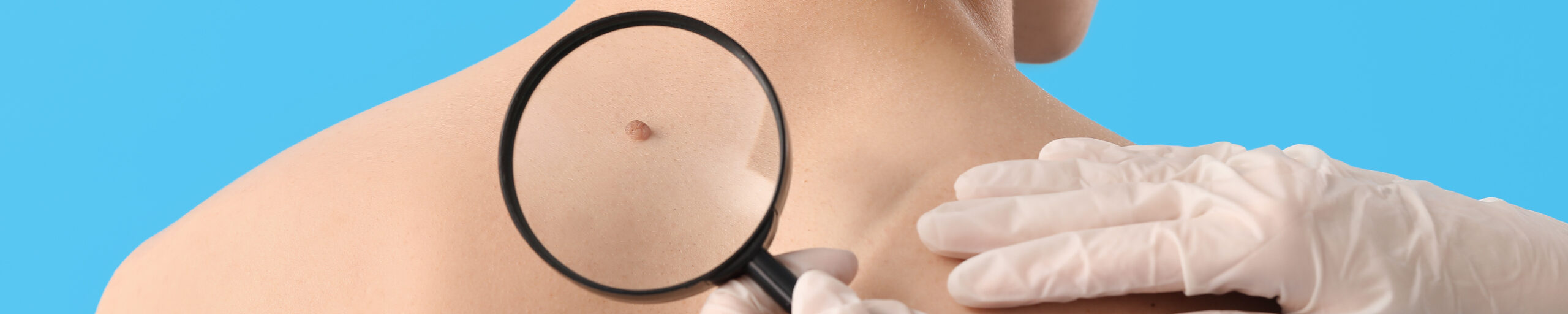
BCC is the most common form of skin cancer, typically caused by cumulative sun exposure over the years. It usually appears as a small, shiny bump or a sore that doesn’t heal. Although it is rarely life-threatening, it can lead to severe physical changes of the skin, such as scars, if left untreated (6, 7).
- Squamous Cell Carcinoma (SCC):
SCC is the second most common form of skin cancer, often caused by more intense, intermittent sun exposure. It may appear as scaly patches, open sores, or growths on the skin and can be more aggressive than BCC if not treated early (6, 8).
- Melanoma:
Melanoma is a type of skin cancer that develops in melanocytes, the cells responsible for producing melanin, the pigment that gives skin its color. Although melanoma is less common than other forms of skin cancer, it is the most dangerous due to its ability to spread to other parts of the body. If not detected and treated early, melanoma can be fatal. (6, 9) In some cases, melanoma can also be inherited due to genetic mutations that are passed down through families, increasing the risk for individuals with a family history of the disease.
UV radiation and aging
UV exposure can also lead to other conditions such as photoaging. Photoaging is the premature aging of the skin caused by prolonged exposure to UV radiation, primarily from UVA rays. These rays penetrate deep into the skin, where they damage the collagen and elastin fibers responsible for keeping the skin firm and elastic. Over time, this damage results in visible signs of aging, such as wrinkles, sagging, and age spots. Unlike the natural aging process, which happens gradually, photoaging is accelerated by repeated UV exposure, often making skin appear older than it actually is (10).
Protecting from UV radiation
Protecting the skin from UV radiation is essential to prevent premature aging and reduce the risk of skin cancer. Simple measures include sunscreen, wearing protective clothing such as hats and sunglasses, and avoiding long exposures to sunlight.
Conclusion
UV radiation has both beneficial and harmful effects on the skin. While moderate sun exposure is beneficial, excessive UV exposure accelerates skin aging and significantly increases the risk of skin cancer. Protecting the skin, through simple methods, is crucial for maintaining healthy skin and reducing long-term damage.
This blog is intended for informational purposes only and should not be considered medical advice. Always consult with your healthcare provider for professional guidance and personal recommendations.
References
(1) CDC. “Ultraviolet Radiation.” Radiation and Your Health, 7 May 2024, https://www.cdc.gov/radiation-health/features/uv-radiation.html.
(2) World Health Organization. “Radiation: Ultraviolet (UV) Radiation.” Www.who.int, 9 Mar. 2016, https://www.who.int/news-room/questions-and-answers/item/radiation-ultraviolet-(uv).
(3) Skin Cancer Foundation. (2018, May 14). “Sun Protection and Vitamin D” – The Skin Cancer Foundation, https://www.skincancer.org/blog/sun-protection-and-vitamin-d/.
(4)Wang, P., Hung, Y., Lin, T., Fang, J., Yang, P., Chen, M., & Pan, T. (2019). Comparison of the Biological Impact of UVA and UVB upon the Skin with Functional Proteomics and Immunohistochemistry. Antioxidants, 8(12), 569. https://doi.org/10.3390/antiox8120569.
(5) Lohan, S., Ivanov, D., Schüler, N., Berger, B., Zastrow, L., Lademann, J., & Meinke, M. (2020). Switching from healthy to unhealthy oxidative stress – does the radical type can be used as an indicator? Free Radical Biology and Medicine, 162, 401–411. https://doi.org/10.1016/j.freeradbiomed.2020.10.319.
(6) Cleveland Clinic. “Ultraviolet (UV) Radiation: What It Is & Its Effect on Your Skin.” Cleveland Clinic, 16 Nov. 2022, https://my.clevelandclinic.org/health/diseases/10985-ultraviolet-radiation.
(7) Mayo Clinic. “Basal Cell Carcinoma – Symptoms and Causes.” Mayo Clinic, 1 Oct. 2021, https://www.mayoclinic.org/diseases-conditions/basal-cell-carcinoma/symptoms-causes/syc-20354187.
(8) Mayo Clinic. “Squamous Cell Carcinoma of the Skin – Symptoms and Causes.” Mayo Clinic, Mayo Clinic, 11 Aug. 2023, https://www.mayoclinic.org/diseases-conditions/squamous-cell-carcinoma/symptoms-causes/syc-20352480.
(9) Mayo Clinic. “Melanoma – Symptoms and Causes.” Mayo Clinic, Mayo Clinic, 30 Dec. 2023, https://www.mayoclinic.org/diseases-conditions/melanoma/symptoms-causes/syc-20374884.
(10) Yale Medicine. “Photoaging (Sun Damage).” Yale Medicine, 2023, https://www.yalemedicine.org/conditions/sun-damage.